.png?width=400&height=251&name=GoSaaS-an-argano-company%20(1).png "GoSaaS - An Argano Company")
Share this
by Scott Darner on Jun 17, 2026, 8:00:04 AM
In CPG, PLM is expected to accelerate innovation, strengthen compliance, and serve as the foundation for accurate product data across the enterprise. However, the main challenge in Product Lifecycle Management is not the technology itself, but rather how people work, how data is generated, and how decisions are disseminated across functions.
Years spent supporting commercialization and owning master data revealed a consistent pattern: when PLM design does not reflect operational reality, the entire organization feels the impact. That perspective has carried through two Oracle PLM implementations, including a redesign required because PLM decisions were not aligned with ERP, MDM, supply chain, manufacturing, and compliance. The issues that surfaced were not isolated; they were systemic.
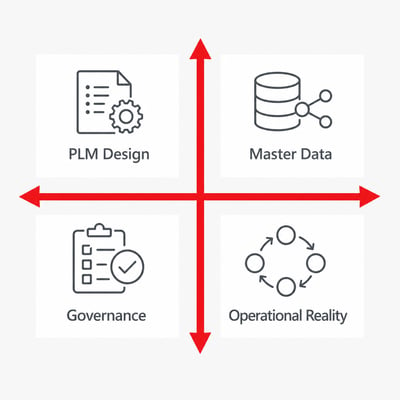
What Often Gets Missed in PLM Design
Executives often view PLM as a strategic enabler, but the day-to-day reality inside the system tells a different story. Unclear templates, missing attributes, packaging complexity, and eleventh-hour changes create friction that no amount of training can solve. A single misunderstood field can break an integration, delay a launch, or trigger a chain reaction of rework across multiple teams.
The core issue is clear: bad data stems from design flaws—not user actions. In CPG, PLM design must address the actual, cross-functional challenges of commercialization, not just representing an ideal process.
Where PLM Design Breaks Down in CPG
Across various implementations and operational experiences, the same breakdowns occur, and they almost always stem from misalignment rather than technological issues. These issues are predictable because they originate from how PLM is structured and how teams interact with it, rather than in the software itself.
One of the most common breakdowns is that templates often fail to reflect how products are built. When templates are overloaded with fields, users lose clarity. When they lack packaging-level distinctions or regulatory triggers, downstream systems inherit the confusion. In one instance, a missing packaging attribute caused an ERP load failure that took days to diagnose because the template never captured the information in the first place.
Another ongoing problem is that lifecycles rarely match the realities of commercialization. CPG development is iterative and influenced by supplier input, regulatory requirements, and packaging changes. When lifecycles force teams to enter data prematurely or allow them to bypass critical steps, governance breaks down. A team once advanced an item to a production-ready state without completing regulatory review simply because the lifecycle allowed it, resulting in a last-minute stop-ship.
A third pattern is that PLM often exposes cross-functional misalignment rather than resolving it. R&D, Packaging, Regulatory, Quality, Procurement, and Supply Chain all operate with different definitions, priorities, and timelines. When PLM does not harmonize those differences, the system becomes another point of friction. In one case, teams debated which “launch date” field was correct because each function had been using a different definition for years, and the system design never reconciled them.
A final and continuing issue is that governance is treated as documentation rather than a system function. Governance only works when it is embedded into attribute dependencies, lifecycle transitions, role-based tasks, naming conventions, and item class structures. Organizations that rely on PDFs and training sessions rather than system-level enforcement experience predictable errors. One company eliminated entire categories of data issues simply by enforcing naming rules and attribute requirements directly in PLM.
Why These Issues Matter for CPG Leaders
These breakdowns are not minor inconveniences. They directly affect speed to market, compliance, supply chain accuracy, and the reliability of ERP and MDM. When PLM design does not reflect the reality of master data, the organization pays for it through delays, rework, and inconsistent information that cascades across functions.
Conversely, when PLM is designed with operational alignment in mind, the business sees measurable improvements: faster commercialization, fewer change orders, stronger compliance, and more predictable downstream execution. PLM becomes an important asset rather than a workflow tool. A connected digital thread helps ensure product data flows consistently across PLM, ERP, and manufacturing throughout the lifecycle.
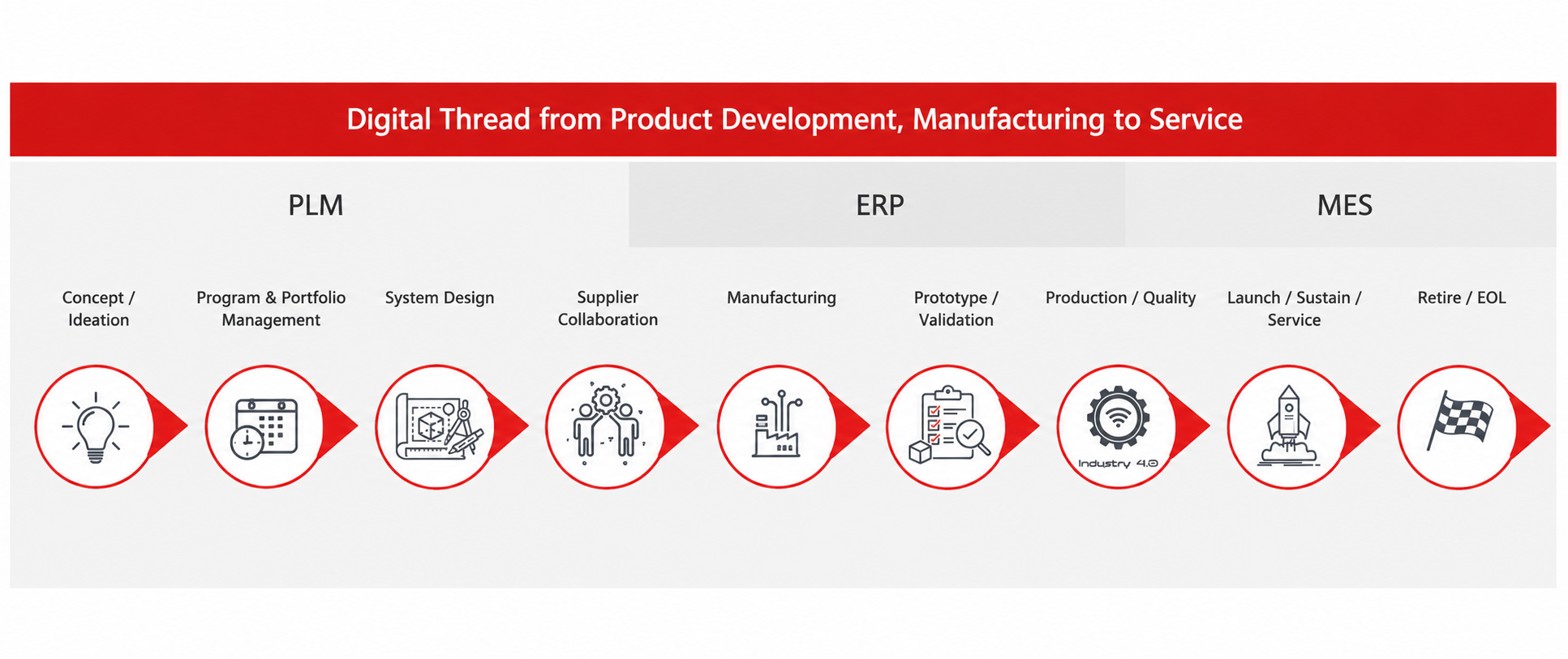
Closing the Gap
Most PLM architects understand systems. Most master data teams understand operations. Very few have visibility on both sides of the equation. That gap is where misalignment begins, and it is where many of the issues described above take root.
Filling that gap demands designing PLM to strengthen the connection between data, processes, and system operation. When that happens, clarity replaces chaos, governance becomes natural, interdepartmental alignment improves, and commercialization moves faster and with greater confidence.
These are the issues CPG teams encounter every day, and they are the ones PLM design must solve if the system is to support the business as leaders expect.
How GoSaaS Can Build Better Systems
A well-designed PLM system does not feel like a system. Teams move through it naturally because the structure represents how they work. The right data is asked for at the right time. Governance is embedded in the system's behavior rather than layered on top. Cross-functional handoffs are supported by shared definitions of what 'complete' means.
What I have learned from working inside commercialization and then designing the systems that support it is that speed comes from removing friction, not adding features. When PLM reflects operational reality, launch errors decrease, rework cycles shorten, and the knowledge that once depended on institutional memory gets embedded in the system itself.
When PLM design is guided by real-world operational experience, these possibilities can be realized. When the architect is the person entering the data, fixing it, and explaining why it matters, the design decisions change. The system is designed for those who have to live within it.
That is the difference between PLM implementation and PLM investment that pays off.
If your commercialization process feels harder than it should, the system design is worth a closer look. We would welcome that conversation.
These are not theoretical outcomes. Recently, a leading consumer packaged goods (CPG) organization successfully went live with Oracle Cloud PLM, fully integrated with ERP and operating on Oracle Redwood. The implementation marked a significant milestone in the company’s product lifecycle transformation journey and reflected the value of aligning PLM design with real business processes from the outset.
Through close collaboration across business and technical teams, GoSaaS delivered a scalable PLM foundation aligned to operational requirements and positioned to support continued growth, innovation, and product excellence. This success demonstrates how thoughtful PLM design and execution can help organizations modernize product development while creating a more connected enterprise.
Are you ready to make the switch from Agile PLM to Oracle PLM Cloud? GoSaaS helps organizations streamline PLM transformation with scalable Oracle Cloud solutions designed to reduce complexity, improve collaboration, and support long-term
Contact GoSaaS today to learn how we can help modernize your Oracle PLM environment and build a connected digital thread across Oracle PLM, ERP, and MDM—improving data quality, governance, and downstream execution.