.png?width=400&height=251&name=GoSaaS-an-argano-company%20(1).png "GoSaaS - An Argano Company")
Share this
by Avery De Marr on Aug 12, 2026, 8:00:13 AM
Artificial Intelligence was undoubtedly one of the biggest topics at this year's OTM SIG Conference. Everywhere you turned, conversations centered around AI models, automation, and what's next for supply chain technology.
When Scott Pulczinski, Vice President, Oracle Logistics Practice, Hena Illaste, AI Practice Lead, and I took the stage for our session, "Autonomous AI Agents in Logistics: From Visibility to Autonomous Action," we wanted to shift the conversation away from the hype and focus on something more important:
How can organizations use AI to solve real business challenges today?
For years, logistics teams have relied on dashboards, alerts, and workbenches to gain visibility into their operations. During the session, I shared an analogy that came to me while watching my son perform in his high school marching band. From the stands, it looks effortless—a group moving in perfect synchronization. In reality, every musician is making constant decisions: staying in formation, adjusting to the people around them, keeping tempo, and still playing their instrument. No one stops every few seconds waiting for the band director to tell them what to do.
To me, that's what separates AI agents from traditional dashboards. Dashboards tell you something happened. AI agents help determine why it happened—and what to do next. AI agents have the context, reasoning, and tools to continuously evaluate what's happening, adapt to changing conditions, and work together toward a shared goal. Instead of simply surfacing problems, they help solve them—and that's where AI agents begin to change the way we work.
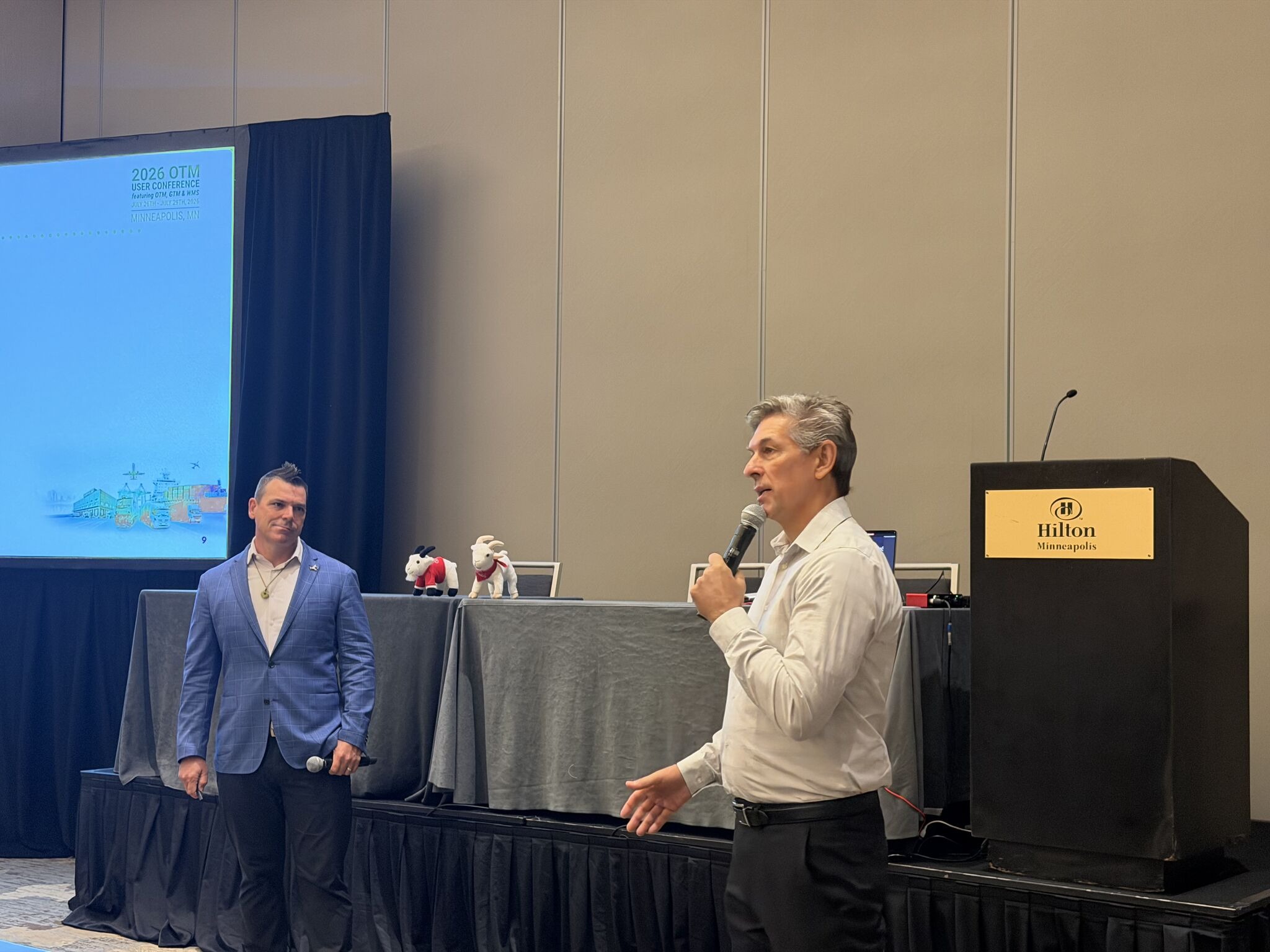
During the session, we explored how AI agents move beyond simply identifying issues. They can gather information across Oracle applications, reason through a business problem, evaluate potential risks, and recommend the next best action—all before a planner begins manually investigating an exception. As I asked the audience during the presentation:
"How many manual interruptions do you need versus the information being presented back to you?"
One of the demonstrations centered around a question every logistics team has asked:
"Why is my shipment late?"
Instead of searching through multiple systems, the AI agent creates its own step-by-step plan, retrieves shipment information, analyzes transportation events, determines the likely cause of the delay, and presents meaningful recommendations to the user. As Hena explained during the session:
"Before it even does that, what it's doing is making a step-by-step plan of what it is going to do."
That ability to reason through a problem—not simply follow predefined rules—is what makes Agentic AI fundamentally different from traditional automation.
We also discussed an important point that often gets overlooked: organizations don't have to jump directly to fully autonomous operations. Successful AI adoption happens in stages. It starts by helping users understand what's happening, progresses to making recommendations, then supports supervised actions before organizations decide where autonomous execution makes sense. Human expertise remains a critical part of that journey.
Another key message we shared is that AI should never be implemented simply because it's available. At GoSaaS, we always encourage customers to start with Oracle's existing capabilities. If the platform already solves the problem, use it. If configuration can accomplish the goal, configure it. AI should be introduced where it delivers measurable business value—not unnecessary complexity.
And none of it works without trusted enterprise data. As Hena reminded attendees:
"If it's garbage in, it's going to be garbage out."
Oracle AI Agent Studio and Oracle Fusion Agentic Applications are opening exciting new opportunities for organizations to build secure, governed AI solutions within their Oracle environments. Our role at GoSaaS is helping customers identify the right opportunities, develop practical AI strategies, and implement solutions that improve business outcomes—not just demonstrate new technology.
But First Redwood
GoSaaS has spent the past two years helping companies adopt Oracle Redwood across SCM and ERP. We are now bringing that experience to our OTM, GTM, and WMS practices. By applying lessons learned across other Oracle application pillars, we can help clients strengthen Redwood adoption, uncover its hidden ROI, unlock AI capabilities, streamline business processes, and improve change management.
Watch the Full Session
Want to see the live demonstrations and hear the complete discussion? Watch the full recording of "Autonomous AI Agents in Logistics: From Visibility to Autonomous Action" to learn how GoSaaS is helping organizations transform Oracle Logistics with enterprise-ready AI.
Why GoSaaS?
GoSaaS combines deep Oracle expertise with practical AI innovation to help organizations maximize the value of their Oracle investments. Whether you're enabling Oracle's built-in AI capabilities, developing custom AI agents, or building a long-term AI strategy, our team can help you move confidently from visibility to autonomous action.
After all, nobody wants a marching band that has to stop every few seconds waiting for the drum major to tell every musician what to do. The best performances happen when everyone has the information, context, and confidence to make the right decisions together. That's exactly what we're helping organizations build with Agentic AI.
Ready to explore what's possible? Connect with GoSaaS to start your AI journey today.